
Call us now :08045476962
 Send Inquiry
 Send Inquiry
Stainless Steel Tube Shell Heat Exchanger
MOQ : 1 Unit
Stainless Steel Tube Shell Heat Exchanger Specification
- Number of Pipe
- 60
- Max Pressure
- 16 bar
- Temperature
- Up to 200C
- Diameter
- Shell: 400 mm, Tube: 20 mm
- Max. Capacity
- 50000 kcal/hr
- Thickness
- 3 mm
- Condition
- New
- Structure
- Tube Shell Type
- Liquid Flow Rate
- 20 m/h
- Working Presssure
- 10 bar
- Voltage
- 220 - 380 V
- Power
- 3 kW
- Weight
- 500 kg
- Dimensions
- 1500 mm x 400 mm x 400 mm
- Surface Finish
- Polished
- Corrosion Resistance
- Yes
- Material of Construction
- Stainless Steel 304/316
- Application
- Industrial, Chemical, Food Processing, Pharmaceutical
- Heat Transfer Area
- 8 m
- Mounting Type
- Floor Mounted
- Leakage Test
- Hydrostatic Tested
- Type
- Heat Exchanger
- End Connection
- Flanged/Threaded
- Cleaning
- Easy Removable Tube Bundle Design
Stainless Steel Tube Shell Heat Exchanger Trade Information
- Minimum Order Quantity
- 1 Unit
- Supply Ability
- 50 Units Per Month
- Delivery Time
- 3 Week
About Stainless Steel Tube Shell Heat Exchanger
Stainless Steel Tube Shell Heat Exchanger offered by us, is a system used to transfer heat between two or more fluids. This exchanger is used in both cooling and heating processes. The fluids may be separated by a solid wall to prevent mixing or they may be in direct contact. Stainless Steel Tube Shell Heat Exchangers design is the most efficient when comparing heat transfer rate per unit surface area.
Built for Demanding Industrial Needs
Constructed with superior SS 304/316 stainless steel, this tube shell heat exchanger ensures long-term reliability even under harsh chemical and industrial conditions. Its 3 mm thickness and polished surface guard against corrosion, making it well-suited for continuous operation in food, pharma, or processing units. Every unit undergoes hydrostatic leakage testing, affirming its safety and resilience for floor-mounted setups.
Efficient Heat Transfer and Easy Maintenance
Boasting an 8 m heat transfer area and 60 internal pipes, this heat exchanger achieves rapid, uniform temperature shifts. Its easy-removable tube bundle simplifies routine cleaning, keeping maintenance downtime minimal while ensuring compliance with industry hygiene standardsvital in applications like food processing and pharmaceutical manufacturing.
FAQs of Stainless Steel Tube Shell Heat Exchanger:
Q: How does the easy removable tube bundle benefit the cleaning process?
A: The easy removable tube bundle design allows for straightforward disassembly and reassembly, enabling faster and more thorough cleaning. This ensures minimal production downtime and supports strict hygiene standards, particularly in the food and pharmaceutical industries.Q: What makes stainless steel 304/316 ideal for this heat exchanger?
A: Stainless steel 304/316 provides exceptional corrosion resistance, durability, and the ability to withstand high temperatures and pressures. These materials are suitable for aggressive industrial environments and comply with industry safety and hygiene requirements.Q: When is this type of heat exchanger recommended for use?
A: This model is particularly recommended for industries needing efficient heat transfer with frequent cleaning needs, such as chemical processing, pharmaceuticals, and food production. It also suits situations requiring resistance to high pressure (up to 16 bar) and elevated temperatures (up to 200C).Q: Where can the Stainless Steel Tube Shell Heat Exchanger be installed?
A: Designed for floor-mounted installation, this exchanger is suitable for industrial settings across India, including factories, processing plants, and commercial sites where robust, space-efficient, and easily serviceable heat exchange solutions are required.Q: What is the standard process for testing the leakage of this exchanger?
A: Each unit undergoes a hydrostatic test, which involves filling the exchanger with water and pressurizing it to check for leaks and ensure the vessels structural integrity.Q: How do the flanged and threaded end connections enhance usage flexibility?
A: Having both flanged and threaded end connection options makes it easier to adapt the exchanger to various pipeline systems, facilitating seamless integration with existing infrastructure in different industries.Q: What are the main benefits of using this heat exchanger in industrial applications?
A: Key advantages include high thermal efficiency, reduced risk of leaks due to hydrostatic testing, simplified cleaning and maintenance, superior corrosion resistance, and the ability to handle demanding operating conditions in diverse industrial sectors.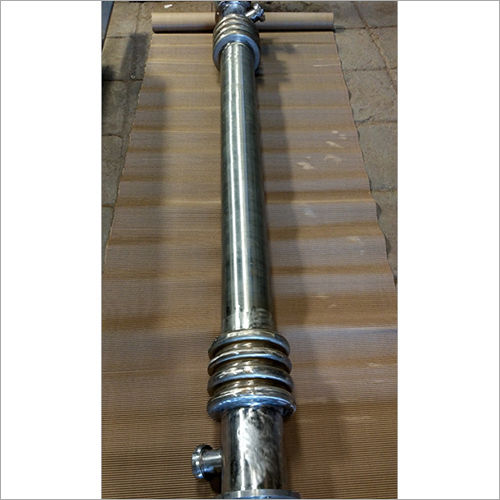
Tell us about your requirement

Price:
Quantity
Select Unit
- 50
- 100
- 200
- 250
- 500
- 1000+
Additional detail
Mobile number
Email


 Send Inquiry
Our Products
- Food Processing Equipment
- Beverage Processing Equipment
- Conveying System
- Food Dispensing System
- Industrial Bucket Elevator
- Strainer & Filter Candles
- Pneumatic Modulating Valve
- Stainless Steel Filter Assembly
- Industrial Gauge Glass Filter Assembly
- Silo Weighing System
- CO2 High Flow Pressure Regulator
- Stainless Steel Tube Shell Heat Exchanger
- Modular Storage Silo
- Dough Mixer
- Chapati Making Machine
- Stainless Steel Tanks

Shed B, Mustil No. 27, Khasra No. 4/1, 5, Village Karewari, Sonipat - 131024, Haryana, India

Mr Nakul Sarin
(Proprietor )
Mobile :08045476962
 Send Inquiry
 Send SMS
Developed and Managed by Infocom Network Private Limited.
