
Call us now :08045476962
 Send Inquiry
 Send Inquiry
Online Beverage Carbonation System
MOQ : 1 Unit
Online Beverage Carbonation System Specification
- Features
- Integrated SIP/CIP System, Digital Flow & Pressure Control
- Power Source
- Electric
- Operating Temperature
- 2C - 10C
- Automation Grade
- Automatic
- Machine Type
- Online Beverage Carbonator
- Function Type
- Mixing and Carbonating
- Phase
- Three Phase
- Noise Level
- Low (<70 dB)
- Speed Mode
- Variable Speed
- Frequency
- 50 Hz
- Feeding System
- Automatic Liquid Feed
- Heating Method
- N/A (Chilling System for Temperature Control)
- Product Type
- Online Carbonation System
- General Use
- Beverage Production (Soft Drinks, Carbonated Water, RTD Beverages)
- Material
- SS316
- Type
- Continuous Process
- Capacity
- 500 to 3000 Liters Per Hour
- Weight (kg)
- 900 kg
- Product Shape
- Rectangular Modular Unit
- Computerized
- Yes
- Automatic
- Fully Automatic
- Control System
- PLC Based with HMI Interface
- Installation Type
- Skid Mounted
- Voltage
- 415 V
- Power
- 5 kW
- Dimension (L*W*H)
- 2400 mm x 1200 mm x 1800 mm
- Raw Material
- Beverage Grade Stainless Steel
- Feature
- High Precision CO2 Dosing
- Color
- Stainless Steel Finish
- Maintenance Access
- Front Panel Door & Quick Release Points
- Output Connection
- Sanitary Clamp
- Application Industries
- Soft Drinks, Mineral Water, RTD Juices, Kombucha
- HMI Screen Size
- 7 inch Touchscreen
- Safety Protection
- Automatic Overpressure & Leak Detection
- Compliance Standard
- Food Grade FSSAI/CE
- Inlet Product Pressure
- 1-2 bar
- Gas Pressure Range
- Up to 4 bar
- CIP Connection Size
- 1.5 inch Tri-clover
- Chiller Compatibility
- Supported (external unit)
- Control Accuracy
- 1% CO2 Content
- CO2 Injection Method
- In-line Microbubble Dispersion
- Product Contact Surface
- Sanitary Finish
- Ambient Condition
- 0C to 40C operation
- Data Logging
- Historical Batch Records Storage
Online Beverage Carbonation System Trade Information
- Minimum Order Quantity
- 1 Unit
- Supply Ability
- 50 Units Per Month
- Delivery Time
- 3 Week
About Online Beverage Carbonation System
Online Beverage Carbonation System
Online Beverage Carbonation System is a high-pressure industrial unit which is used to fill pressurized carbon dioxide in cold drink bottles which acts as a protective barrier for the prevention of bacterial growth within the stored liquid and keeps it fresh for a longer period of time. It is highly popular and demanding due to its large carbonation range in between 0.5 to 10 grams per liter which results in high production efficiency. The offered Online Beverage Carbonation System is designed by using stainless steel which results in higher strength and robustness.
Overview
This system has a capacity to dose high percentage of CO2in beverages in very compact manner. A high pressure pump sends beverage through a venturi and this creates vaccum at venturi nozzle. CO2 gas inject due to vaccum expands upto 150 times. This mixer is sent to a gas absorber where velocity is dropped to increase the pressure. We reach upto 6 V/V carbonation.
Beverage created is stable
Features
- Available in SS316 & SS304 Grade
- Small size of carbonation tank is required even for a high capacity machine
- This system can be used for ambient temperature of beverage upto 4GV
Advanced Microbubble CO2 Dispersion
This system ensures uniform carbonation using in-line microbubble dispersion, resulting in consistent texture and mouthfeel for every batch. The precise CO2 control, accurate to 1%, is ideal for premium beverage production.
Sanitary and Compliant Design
All beverage contact surfaces are made from SS316 stainless steel and maintain a sanitary finish. The unit meets food safety standards (FSSAI/CE) and supports SIP/CIP for thorough cleaning, ideal for sterile and hygienic beverage processing.
Ease of Operation and Maintenance
With its 7-inch touchscreen HMI, users benefit from intuitive process control. Front panel doors and quick-release points enable rapid, tool-free maintenance, minimizing downtime and streamlining service tasks for operators.
FAQ's of Online Beverage Carbonation System:
Q: How does the CO2 injection method optimize beverage carbonation?
A: The system employs in-line microbubble CO2 dispersion, effectively dissolving gas throughout the liquid for even carbonation. This approach ensures precise, stable CO2 content (within 1%), enhancing beverage consistency and taste.Q: What industries can use this beverage carbonation system?
A: It is suitable for manufacturers in soft drinks, mineral water, RTD juices, and kombucha. Its flexibility, sanitary design, and compliance with FSSAI/CE make it ideal for large-scale beverage production in food industries.Q: When should the system be cleaned and maintained?
A: Routine maintenance is simplified with SIP/CIP compatibility, and service access is provided via front panel doors and quick-release points. Scheduled CIP cycles should follow your plant's sanitation protocols for food safety.Q: Where can this system be installed, and what installation steps are required?
A: The skid-mounted, modular design allows easy installation in beverage manufacturing facilities. Set up requires suitable floor space, electrical (415V, three-phase), and connectivity to product/feed lines, as well as access to an external chiller unit.Q: What benefits does the 7-inch touchscreen HMI offer?
A: The HMI provides clear, centralized control over operations, simplified parameter adjustments, real-time data visualization, historical batch logging, and user-friendly troubleshooting-making operation accessible for all skill levels.Q: How is product quality and safety ensured during carbonation?
A: The system features automatic overpressure and leak detection to safeguard operations. It guarantees sanitary product contact with SS316 components and maintains quality through precise CO2 control and robust PLC-based automation.Q: What is the typical process flow using this system?
A: Product is supplied automatically under controlled pressure, chilled via an external unit, carbonated continuously by precise microbubble CO2 injection, mixed, and output through sanitary connections, with all events recorded for batch validation.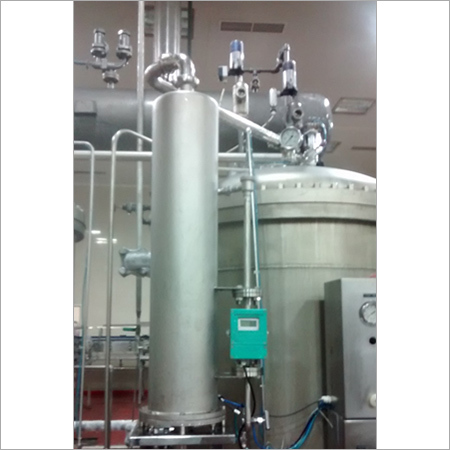
Tell us about your requirement

Price:
Quantity
Select Unit
- 50
- 100
- 200
- 250
- 500
- 1000+
Additional detail
Mobile number
Email

More Products in Beverage Processing Equipment Category
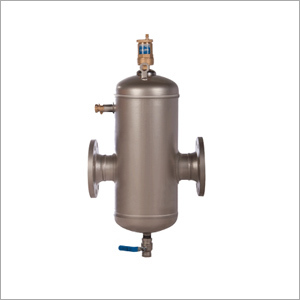
Air Bubble Separator
Price Range 5000.00 - 40000.00 INR / Unit
Minimum Order Quantity : 1 Unit
Dimension (L*W*H) : 2500 x 900 x 1350 mm
Machine Type : Industrial Washing Machine
Function Type : Mixing Other, Washing & Separation
Automation Grade : Automatic

 Send Inquiry
Our Products
- Food Processing Equipment
- Beverage Processing Equipment
- Conveying System
- Food Dispensing System
- Industrial Bucket Elevator
- Strainer & Filter Candles
- Pneumatic Modulating Valve
- Stainless Steel Filter Assembly
- Industrial Gauge Glass Filter Assembly
- Silo Weighing System
- CO2 High Flow Pressure Regulator
- Stainless Steel Tube Shell Heat Exchanger
- Modular Storage Silo
- Dough Mixer
- Chapati Making Machine
- Stainless Steel Tanks

Shed B, Mustil No. 27, Khasra No. 4/1, 5, Village Karewari, Sonipat - 131024, Haryana, India

Mr Nakul Sarin
(Proprietor )
Mobile :08045476962
 Send Inquiry
 Send SMS
Developed and Managed by Infocom Network Private Limited.
